Most people in Murfreesboro have tried the same acne playbook before walking into a medical spa: drugstore cleansers, an aggressive scrub, salicylic acid wipes, maybe a benzoyl peroxide spot treatment. When it doesn't work, the next stop is usually a dermatologist for topical retinoids or oral antibiotics. Both have their place — but there's a significant gap in the middle of those two options, and that's where a master esthetician at a medical spa fits.
Acne treatment at Aesthetics Collective Medspa in Murfreesboro is built around clinical-grade products, in-office treatments that aren't available at retail, and a treatment plan that adjusts month over month based on what your skin is actually doing. Rachel Clayton-Gubler, our Master Aesthetician, Owner, and certified Acne & Pigmentation Specialist, has spent years building protocols for adult and teen acne — both of which respond to fundamentally different approaches.
This guide walks through how we approach acne at our Murfreesboro studio, what makes a master esthetician different from a general aesthetician, and the specific in-office treatments that consistently clear active acne and fade the scars and pigmentation it leaves behind.
If you assume the routine that worked for you in high school will work for the acne that showed up in your 30s, you're going to spend months frustrated. Adult acne and teen acne have different causes, manifest in different places on the face, and respond to different treatments.
Teen acne is primarily driven by puberty hormones surging and oil glands producing excess sebum. It tends to show up across the T-zone (forehead, nose, chin) and is dominated by whiteheads, blackheads, and inflammatory papules. Treatment focuses on managing oil production, clearing pores, reducing inflammation, and preventing scarring. The teenage skin barrier is generally resilient, which means we can use more active treatments than we would for adult skin.
Adult acne is more often hormonal (stress, perimenopause, birth control changes, cortisol), shows up along the jawline and lower face, and tends to be deeper cystic lesions rather than surface whiteheads. The skin barrier is more fragile at 35 than at 15 — adult acne responds badly to aggressive scrubs and over-exfoliation, which is the #1 mistake we see in new clients walking in from drugstore routines.
The treatment plan for an adult acne client at our Murfreesboro studio looks fundamentally different: gentler cleansing, targeted exfoliation 2-3x per week (not daily), hydration-forward routines, monthly in-office treatments, and addressing the hormonal triggers when present.
At-home products do 60-70% of the work for most acne cases. The remaining 30-40% — the breakthrough that takes someone from 'managing' to 'clear' — comes from in-office treatments that aren't available at retail. The protocols we use most often at Aesthetics Collective:
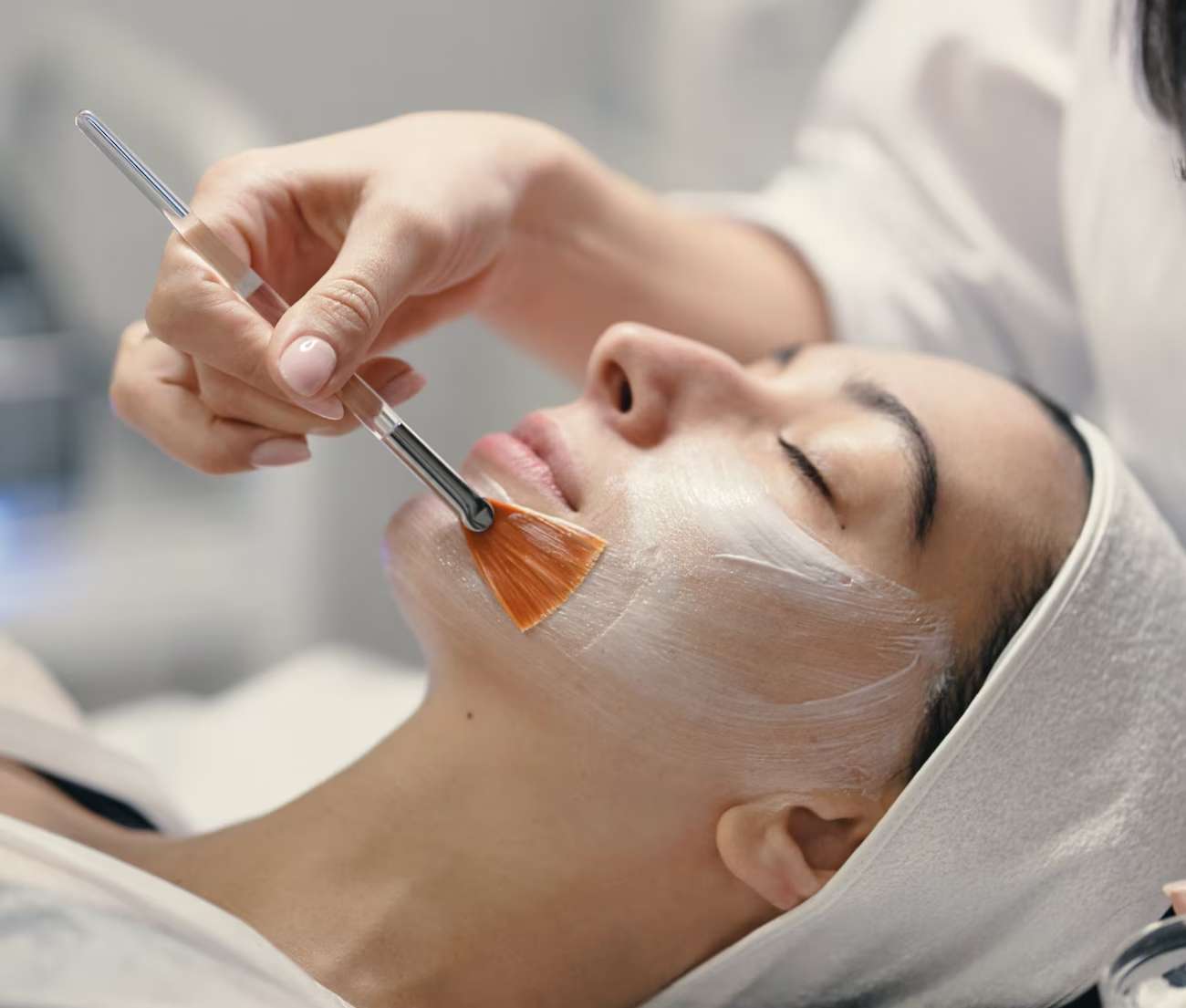
A proper acne facial isn't a relaxation treatment. It's a clinical session focused on deep cleansing, professional extractions of comedones, blue/red LED light therapy, and a treatment mask matched to your skin's current state. Extractions performed by a trained provider clear pores without the trauma of at-home squeezing — which is the most common cause of long-term acne scarring we see in our Murfreesboro clients. Booked every 4-6 weeks during an active acne phase.
Salicylic acid and lactic acid peels target the pore-clogging dead skin cells and bacteria that drive breakouts. A professional 20-30% salicylic acid peel reaches depths your home BHA can't — and resets oil production for 4-6 weeks. We typically do peels in a series of 3-6, spaced 4 weeks apart. Read more about our chemical peel options.
For clients dealing with post-acne scarring (atrophic scars, ice pick scars, rolling scars), microneedling is one of the most effective treatments available. The micro-channels created by the device trigger collagen production that gradually fills depressed scars over 3-6 sessions. We often combine microneedling with exosome serums for accelerated results.
Blue light kills the bacteria (P. acnes) that drives inflammatory acne. Red light reduces inflammation and promotes healing. Most acne facials include LED light therapy. Standalone LED sessions can be added between facials to maintain clearance.
The mistake most clients make at home is using too many active products simultaneously, then wondering why their skin barrier is destroyed. A working acne routine for most of our Murfreesboro clients is simpler than they expect:
What to skip: physical scrubs, daily exfoliating wipes, fragrance-heavy products, pore strips, and anything labeled as a 'deep clean.' Aggressive treatments damage the barrier and create the dryness-rebound oil cycle that worsens acne.
Topical treatment is only one part of the equation. The triggers driving your acne also need attention if you want long-term clearance. The patterns we see most often in Murfreesboro clients:
Stress and cortisol: Sustained high cortisol increases oil production and inflammation. A 2024 study in the Journal of Clinical and Aesthetic Dermatology found that participants reporting high chronic stress had 2.3x more acne flares than low-stress controls. Managing stress isn't optional for clearing chronic adult acne.
Diet and dairy: Whey protein, milk, and high-glycemic foods (sugar, refined carbs) consistently correlate with worse acne in clinical research. We don't recommend cutting any food group without speaking to a dietitian, but tracking your skin response to dairy and sugar for 30 days often reveals a clear pattern.
Hormonal birth control: Combination oral contraceptives often improve acne; progestin-only options often worsen it. If your acne started shortly after a birth control change, that's worth a conversation with your provider.
Sweat and humidity: Murfreesboro summers create a perfect environment for clogged pores. Cleansing within 30 minutes of finishing exercise — not the next morning — significantly reduces breakouts in T-zones.
Every acne client at Aesthetics Collective starts with a 30-45 minute consultation with Rachel or one of our licensed aestheticians (Emily Rodriguez and Tricia Hoover, both Licensed Aestheticians, handle most ongoing acne clients). At consultation, we'll:
From there, you'll typically commit to 4-6 in-office sessions over 3 months, plus at-home product adjustments we monitor at each visit. By week 12 most clients see significant improvement; by month 6 most clients have moved from active acne management to maintenance.
If you're past the active acne phase but dealing with the aftermath — pigmentation, redness, scarring — we have separate treatment plans for each type of damage. Post-inflammatory hyperpigmentation (PIH) fades over time and accelerates with peels, IPL, and brightening agents. Post-inflammatory erythema (PIE), the red marks, fades faster with vascular treatments and time.
True acne scars (atrophic, ice pick, rolling) require microneedling, deep peels, or in severe cases laser resurfacing. Set realistic expectations — scars can be significantly improved (40-70% reduction in appearance) but rarely fully erased. Most of our Murfreesboro clients dealing with scarring complete 4-6 microneedling sessions over 6 months and continue with maintenance treatments once a year.
If you've been managing acne with the same drugstore routine for years and not getting anywhere, a master esthetician is the right next step before considering more aggressive interventions. Book your consultation today, or browse our full services menu to see the range of treatments we offer. You can also learn more about our team on the about page.
Most clients see noticeable improvement within 4-6 weeks of starting a structured plan, with significant clearance by week 12. Full clearance and long-term maintenance is typically a 6-month process. Acne that's been active for years doesn't clear in 30 days — anyone promising that is overselling.
Yes, when matched correctly to your skin. The key is starting at conservative settings and adjusting based on your skin's response. We always patch-test new treatments on sensitive clients, and we build in barrier-repair steps when needed. The biggest risk to sensitive skin isn't professional treatment — it's aggressive at-home routines.
Some medications affect how your skin responds to professional treatment. Accutane (isotretinoin) requires a 6-month wait after stopping before peels, microneedling, or laser. Topical retinoids should typically be paused 5-7 days before a peel. We review every medication and product at your consultation and adjust the treatment plan accordingly.
A starting acne plan at Aesthetics Collective typically runs $600-$1,500 for an initial 12-week protocol including 4-6 in-office treatments and recommended at-home products. The exact cost depends on the severity of your acne, which treatments your plan includes, and the products you choose. Single treatments range from $85 for a basic acne facial to $325 for advanced microneedling.
Generally we want to clear active acne before aggressive scar treatment — microneedling on actively inflamed skin can spread bacteria and worsen breakouts. The exception is light surface peels, which support both active acne clearance and gradual pigmentation/scar fading. Most clients complete an acne-clearance phase first, then transition into a 6-month scar-treatment phase.
For mild to moderate acne, a master esthetician with a structured in-office plan is often more effective than prescription topicals alone. For severe cystic acne, hormonal acne unresponsive to topicals, or cases needing Accutane, a dermatologist is the right call. Many of our Murfreesboro clients see both — a dermatologist for prescription oversight and us for in-office treatments and ongoing skin support.


