If you've searched "Botox cost Murfreesboro" you've probably noticed most med spa websites won't give you a straight number — they ask you to book a consultation instead. That's not evasiveness; it's because Botox is priced by the unit, and the number of units you need depends entirely on which areas you're treating, how strong the muscles are, and the result you're after. Two people can both get "forehead Botox" and pay very different amounts.
Here's the honest framework. In the Murfreesboro and greater Nashville area, Botox is typically priced between $11 and $15 per unit, with most reputable medical spas landing around $12–$14. A full upper-face treatment (the three most-requested areas together) commonly runs somewhere in the $300–$600 range depending on your muscle strength and goals. Below, we break down exactly how that math works so you can walk into a consultation knowing roughly what to expect.
At Aesthetics Collective Medspa in Murfreesboro, all injectable treatments are performed under medical oversight by trained injectors, and every quote is confirmed at a complimentary consultation — but you deserve to understand the pricing before you ever sit in the chair.
A "unit" is a standardized measure of Botox's active ingredient. Every vial contains a set number of units, and your injector draws up the precise amount needed for your treatment. Pricing per unit is actually the most transparent and fair way to charge — you pay for exactly what your muscles require, no more.
Be cautious of clinics advertising flat "per area" pricing without disclosing units. A $199 "forehead special" might sound cheaper than per-unit pricing until you learn it only includes 10 units — half of what many people need for a lasting result. When comparing prices between Murfreesboro providers, always ask two questions: What's your price per unit? and Roughly how many units will my areas need?
These are general ranges used across the aesthetics industry. Your injector will assess your specific anatomy, but this gives you a realistic starting point for budgeting.
Typically 10–20 units. The forehead is often treated conservatively and in balance with the frown lines, because over-treating it alone can cause the brows to feel heavy.
Typically 15–25 units. This is one of the most-requested areas and one of the most satisfying, since it softens the tense, angry look many people dislike.
Typically 10–24 units total (both sides). Softens the lines that appear when you smile while keeping the smile natural.
Bunny lines on the nose (5–10 units), a lip flip (4–8 units), chin dimpling (4–8 units), and a "gummy smile" (2–6 units) are smaller, lower-cost add-ons. Jaw slimming or clenching relief (masseter Botox) is larger — often 20–50 units total — and priced accordingly.
Adding these up: if you treat forehead + frown lines + crow's feet together (the classic upper-face trio), you're commonly in the 40–50 unit range. At $12–$14 per unit, that's roughly $480–$700 — though many people need less, especially first-timers who prefer a subtle result.
Beyond the number of units, several factors move your final cost up or down:
Clients often ask whether Dysport is cheaper. Because Dysport uses a different unit scale (roughly two to three Dysport units per one Botox unit), the per-unit price is lower, but you need more units — so the total treatment cost usually ends up in a similar range. The better question isn't which is cheaper, but which suits your muscles and goals. Dysport tends to spread a little more, which can be ideal for larger areas like the forehead; Botox offers precise control for smaller, targeted zones. Your injector will recommend the right fit.
Most people enjoy results for 3 to 4 months. That means budgeting for Botox is really about the year, not the single visit — most clients schedule three to four sessions annually to stay consistently smooth. Consistency actually helps: with regular treatment, the muscles gradually weaken, and some clients find they need slightly fewer units over time or can stretch their intervals.
If you're new, we usually suggest starting conservatively, returning in two weeks for a complimentary touch-up assessment, and dialing in your ideal dose from there. That approach protects both your results and your wallet.
If you've never had Botox, the unknown can feel bigger than the treatment itself. Here's the honest play-by-play. Your visit starts with a short consultation where your injector watches your face move — you'll be asked to raise your brows, frown, and smile so they can see exactly which muscles are creating the lines that bother you. From there they map a plan and give you the unit count and price before anything happens.
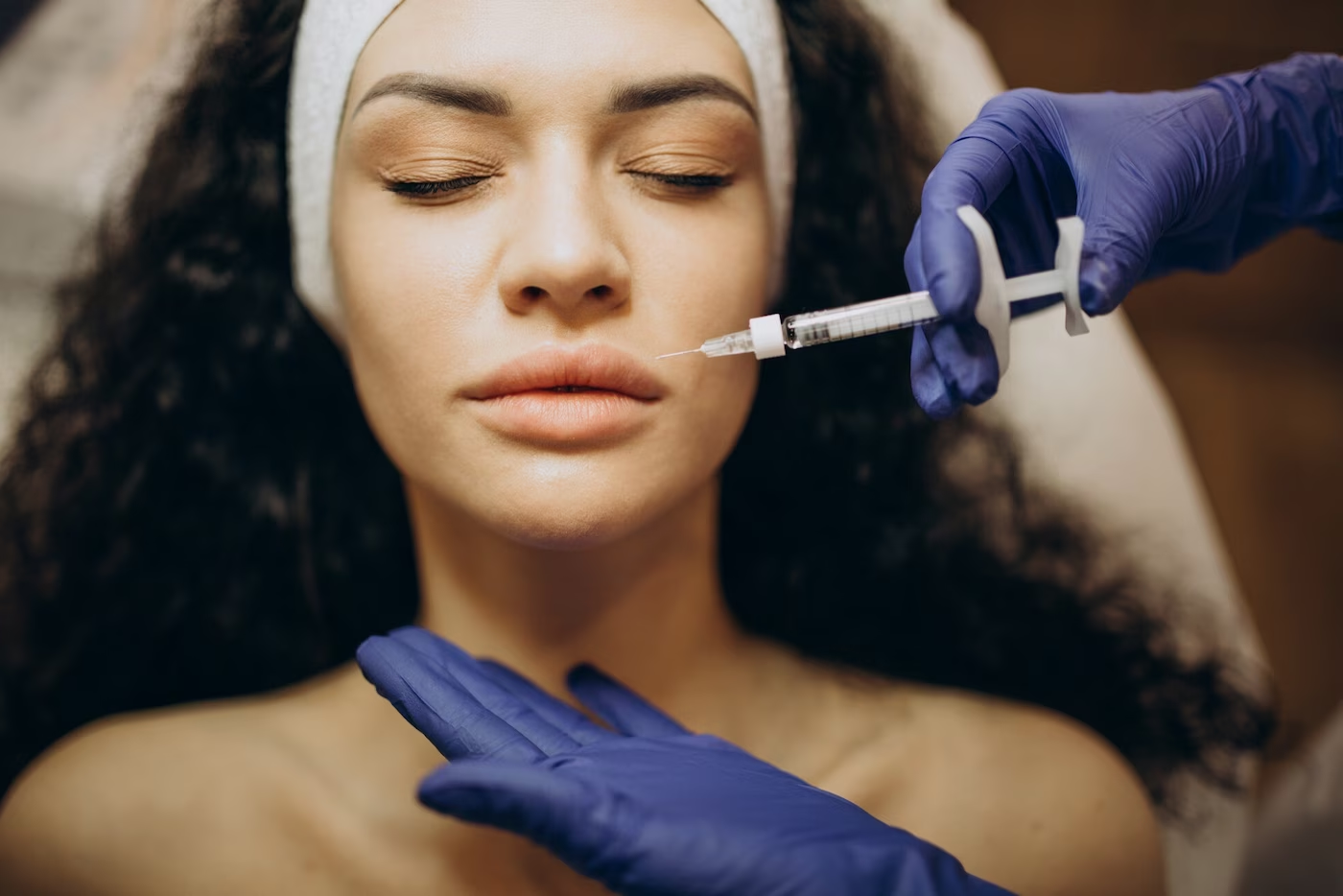
The injections themselves take about 10 minutes. Botox is delivered through a very fine needle, and most people describe the sensation as a quick pinch or tiny pinprick — uncomfortable for a second, not painful. There's no numbing required for most areas, and no downtime: you can drive yourself home and return to work immediately. You may have a few tiny red bumps at the injection sites that fade within 15–20 minutes, and occasionally a small bruise. All told, most first-timers are surprised by how quick and low-drama the whole thing is.
Good aftercare helps your results settle evenly and lowers the small risk of the product migrating. For the first 24 hours we recommend a few simple things: stay upright for about four hours (no lying flat or napping right after), skip strenuous exercise and saunas for the day, and avoid rubbing or massaging the treated areas — that includes facials and even firm face-washing. It's also smart to hold off on alcohol the day of treatment to reduce bruising.
Botox doesn't work instantly. You'll typically start to see softening around day 3, with the full effect landing by day 10 to 14. That's why we book your complimentary touch-up assessment at the two-week mark rather than sooner — judging results before then leads people to think they need more product when they simply need a few more days.
Groupon deals and pop-up "Botox specials" are tempting, but injectables are a medical treatment, not a commodity. The risks of poorly placed Botox — a droopy brow, an uneven smile, a frozen look, or asymmetry — are real, and correcting them means waiting months for the product to wear off. Price matters, but the injector's training, the medical oversight behind the treatment, and their aesthetic judgment matter far more. A slightly higher per-unit price from an experienced, medically supervised injector is almost always the better value.
It's also worth watching for two quieter red flags: heavily diluted product (which can mean weaker, shorter-lived results even if the per-unit price looks great) and prices that seem too good to be true for genuine, brand-name Botox. When you compare quotes, you're really comparing the whole package — product, expertise, safety, and how natural the result will look. You can learn more about how we approach injectables on our injectables service page, or meet the team on our about page.
Every injectable client at Aesthetics Collective starts with a complimentary consultation. It's the only way to give you an accurate quote, and it's genuinely no-pressure. At your visit, we'll:
If injectables aren't the right fit for your goals, we'll tell you honestly and point you toward a better option.
The only way to know exactly what your Botox will cost is a quick, complimentary consultation. Book your appointment today, explore our full treatment menu, or read more about our injectable treatments in Murfreesboro.
In the Murfreesboro and Nashville area, Botox typically runs $11–$15 per unit, with most established medical spas around $12–$14. Your total cost depends on how many units your treatment areas require, which is confirmed at your consultation.
It depends on the areas and your muscle strength. As a rough guide: forehead lines 10–20 units, frown lines 15–25 units, and crow's feet 10–24 units. Treating all three together commonly totals 40–50 units, though first-timers often start with less.
Dysport has a lower per-unit price but requires more units, so the total treatment cost usually ends up similar to Botox. The better choice depends on your muscles and goals, not the price — we'll help you compare at your consultation.
Botox typically lasts 3–4 months, so most clients schedule three to four sessions per year to maintain results. With consistent treatment, some people find they can gradually extend the time between visits.
Most people describe the injections as a quick pinch, and no numbing is usually needed. There's essentially no downtime — you can return to your day right away, aside from avoiding heavy exercise, lying flat, and rubbing the area for the first several hours.
Per visit, Botox is usually less than filler because it's priced per unit rather than per syringe. But they do different jobs — Botox relaxes muscles while filler restores volume — so the right choice depends on your goals, not just the price. Many clients use both.
Because Botox is priced per unit and everyone needs a different number of units, a single flat price would be misleading. A consultation lets us assess your anatomy and give you an accurate quote before any treatment.


