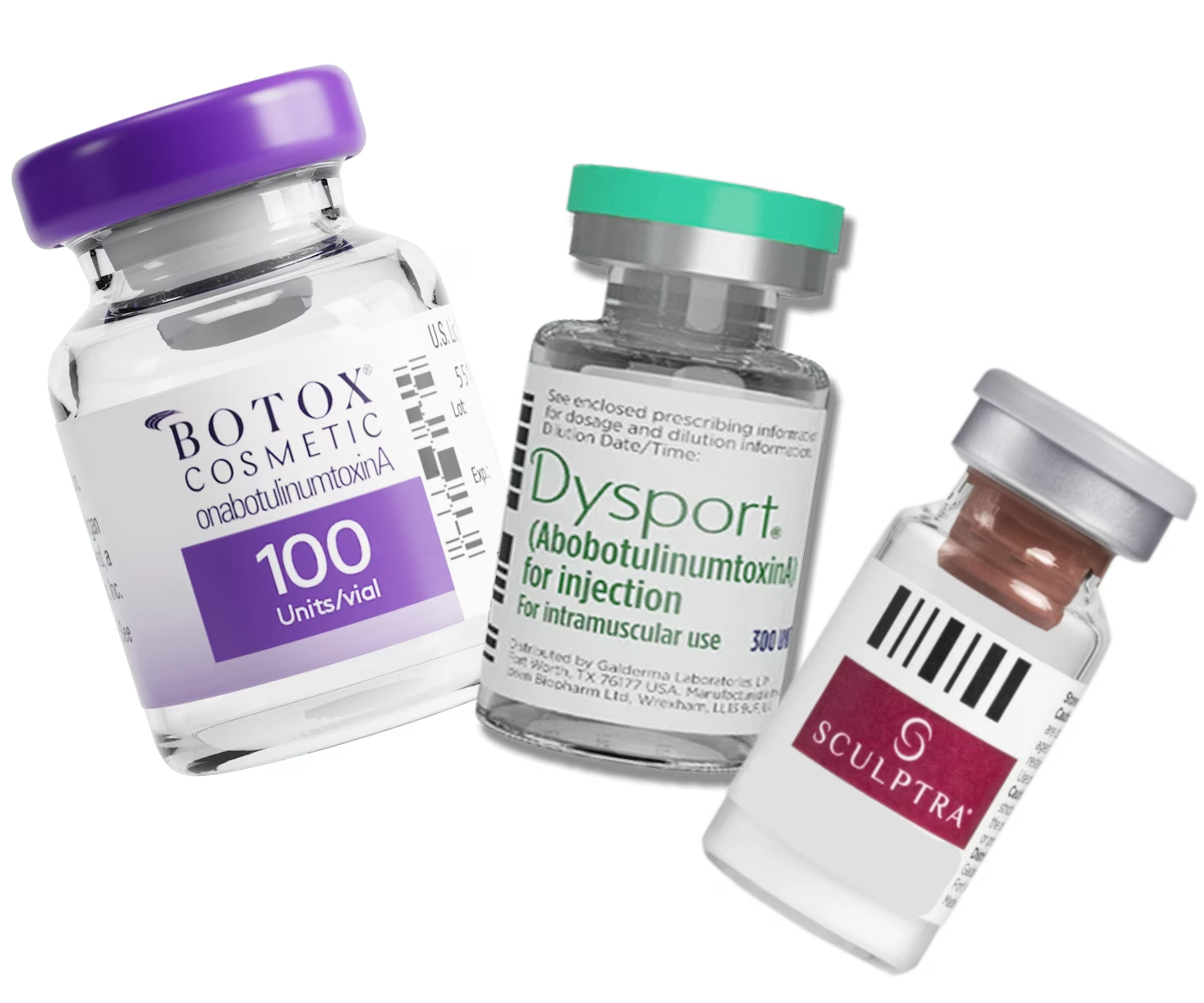
Botox and dermal fillers get lumped together constantly — both are injectables, both are popular, both are done in a quick office visit. But they do fundamentally different jobs, and choosing between them starts with understanding one simple distinction: Botox relaxes muscles, while fillers restore volume.
Get that right and everything else falls into place. Botox softens the lines caused by movement — the creases that appear when you frown, squint, or raise your eyebrows. Dermal fillers restore the plumpness and structure that fade with age or that you'd simply like to enhance — thinner lips, flattened cheeks, or the deeper folds that stay put even when your face is relaxed. Many people actually benefit from both, used together in what's often called a "liquid facelift."
At Aesthetics Collective Medspa in Murfreesboro, both treatments are performed by trained injectors under medical oversight, and the right plan always starts with a complimentary consultation. Here's how to think about which is right for you.
Botox (and similar neuromodulators like Dysport) is made from a purified protein that temporarily relaxes the specific muscles it's injected into. When those muscles can't fully contract, the dynamic wrinkles they create soften and smooth. It's the go-to treatment for the upper face.
Botox is best for:
Because it works on movement-related lines, Botox is also a powerful preventive treatment — many clients start in their late 20s or 30s to keep lines from etching in permanently. Results appear within a few days to two weeks and last about three to four months.
Dermal fillers — most commonly made from hyaluronic acid — add volume beneath the skin. Rather than relaxing muscles, they physically fill, lift, and contour. Fillers restore what time takes away and enhance features you'd like to define.
Fillers are best for:
Filler results are immediate (with some initial swelling that settles over a couple of weeks) and, depending on the product and area, last anywhere from 6 to 18 months. Some collagen-stimulating options like Sculptra work more gradually and can last even longer — read our guide on injectables in Murfreesboro for more.
Here's a quick self-check. Look in the mirror with your face completely relaxed, then make some expressions:
Many people have both types of concern, which is why combining the two often gives the most natural, balanced result. Botox smooths the upper face while filler restores structure to the mid and lower face.
One of the biggest practical differences is maintenance rhythm. Because Botox lasts three to four months, most people who treat consistently plan on three or four sessions a year. Fillers last much longer — often 6 to 18 months depending on the product and the area — so you might refresh lips once or twice a year, while deeper structural filler in the cheeks may hold for well over a year.
That difference shapes your yearly budget in a way the per-visit price doesn't fully capture. Botox looks less expensive per appointment but recurs more often; filler costs more up front per syringe but lasts longer between visits. When clients ask us to help them plan, we usually map out a realistic year — which areas, how often, and roughly what to expect — so there are no surprises. Your exact plan and pricing are always set at your consultation.
Both treatments have strong safety records when performed by a trained, medically supervised injector. The most common side effects are mild and short-lived: small bruises, minor swelling, or tenderness at the injection sites. With Botox, placement matters — skilled injection avoids issues like a heavy brow or asymmetry, which resolve on their own as the product wears off if they do occur. With filler, the main things a good injector guards against are lumps, overfilling, and (rarely) vascular complications, which is exactly why who does your treatment matters more than almost anything else.
This is the real takeaway: the treatment is only as good as the hands performing it. Ask about training and medical oversight, look at real before-and-afters, and choose someone whose aesthetic you trust. A great injector will also tell you when the answer is "less," or "not yet," or "a different treatment entirely."
Because they're priced differently, comparing cost isn't quite apples to apples. Botox is priced per unit — typically $11–$15 in the Murfreesboro area — so a treatment usually runs a few hundred dollars depending on how many areas and units you need. Fillers are priced per syringe, commonly $650–$950 per syringe depending on the product and area. Filler tends to cost more per visit but also lasts considerably longer, so the annual cost can even out. Your exact plan and pricing are set at your consultation.
Yes — and many clients do. Combining them in a single visit is common and safe when performed by a trained injector, and it often produces the most harmonious result because it addresses both movement lines and volume loss together. Your injector will sequence and place each treatment thoughtfully. If you're new to injectables, we often suggest starting with one, seeing how you like the result, and building from there.
If you're new and unsure, here's the pattern we see most often. Clients whose main concern is forehead or frown lines — the "I look tired or angry when I'm not" complaint — usually start with Botox, because it's a smaller commitment, wears off if you decide it's not for you, and delivers a noticeable but subtle refresh. Clients whose main concern is thin lips, flattened cheeks, or deep folds usually start with a single syringe of filler in one area, built conservatively.
From there, many people gradually add the other over time as they get comfortable — a little Botox up top, a little filler below — which is how the balanced, natural "you but refreshed" look comes together. There's no rush and no single right answer; the best plan is the one built around your face and your goals.
The truth is that the best injectable plan is personal — it depends on your anatomy, your goals, and what will look natural on your face. A good injector won't just do what you ask; they'll tell you honestly whether Botox, filler, both, or neither is the right call. At Aesthetics Collective, every injectable journey starts with a complimentary consultation where we:
Still not sure whether you need Botox, filler, or both? That's completely normal — and it's exactly what a consultation is for. Book your complimentary consultation today, explore our full treatment menu, or learn more about our injectable treatments in Murfreesboro.
Botox relaxes the muscles that create movement wrinkles (like frown lines and crow's feet), while dermal fillers add volume to restore fullness or enhance features (like lips and cheeks). They treat different concerns and are often used together.
Fillers generally last longer — roughly 6 to 18 months depending on the product and area — while Botox typically lasts 3 to 4 months. Some collagen-stimulating fillers last even longer.
Yes. Combining Botox and filler in one visit is common, safe when done by a trained injector, and often gives the most balanced, natural result by addressing both movement lines and volume loss together.
Under-eye hollows and tear troughs are a volume issue, so they're typically treated with filler, not Botox. It's a delicate area that requires an experienced injector, which we'll assess carefully at your consultation.
Botox usually costs less per visit because it's priced per unit, while filler is priced per syringe and costs more up front. But filler lasts longer, so over a year the totals can be closer than they first appear. The right choice depends on your goals, not just the price.
Not when they're done well and conservatively. The "frozen" or overfilled look comes from too much product or poor placement. A skilled injector aims for a natural result — softened lines and restored balance — that looks like a refreshed version of you, not a different person.
It depends on your primary concern. If movement lines on your upper face bother you most, Botox is a great starting point; if it's thin lips or lost volume, filler is the answer. We'll help you decide at your consultation and often suggest starting conservatively.


