You go through winter with skin that looks even. April rolls around, you start spending time outside, and by mid-July you're staring at a face in the mirror that suddenly shows brown spots, blotchy redness, broken capillaries across the cheeks, and dullness you don't remember seeing in February. The summer didn't cause that damage in one season — it surfaced damage that had been accumulating since you were a teenager. UV penetrates layers of skin where pigment cells live, and the heat and inflammation of a Murfreesboro summer pulls that hidden damage to the surface where you can finally see it.
IPL (intense pulsed light) is the in-office treatment built specifically for the type of damage Tennessee summers reveal. Unlike laser treatments that target a single wavelength, IPL emits a broad spectrum of light that the skin filters — your provider tunes the wavelength to target either pigment (brown spots), vascular concerns (redness, broken capillaries), or both in the same session. The result over a series of treatments: visibly more even skin tone, fewer dark spots, less persistent redness, and a glow that doesn't fade with the next breakout.
At Aesthetics Collective Medspa in Murfreesboro, IPL is one of the most-booked treatments from August through November — the post-summer window when clients see what UV exposure left behind and want it gone before the holiday season. Here's everything you need to know before you book your first session.
IPL is one of the most versatile light-based treatments in modern aesthetic medicine. The same device, with different settings, can address five distinct skin concerns:
What IPL does NOT treat well: deep wrinkles, acne scars (microneedling and chemical peels are better for that), active acne, or sagging skin. We'll always tell you straight at your consultation if IPL isn't the right tool for your concerns.
Your first appointment at Aesthetics Collective starts with a 15-minute consultation. Your provider assesses your skin tone, your specific concerns, recent sun exposure, medications, and skincare history to determine the safest and most effective device settings. We use the Fitzpatrick scale to classify your skin tone — IPL is safest and most effective for Fitzpatrick types I-III, but modern devices can also treat darker skin types (IV-V) with adjusted settings and conservative protocols. We'll always patch-test if there's any question.
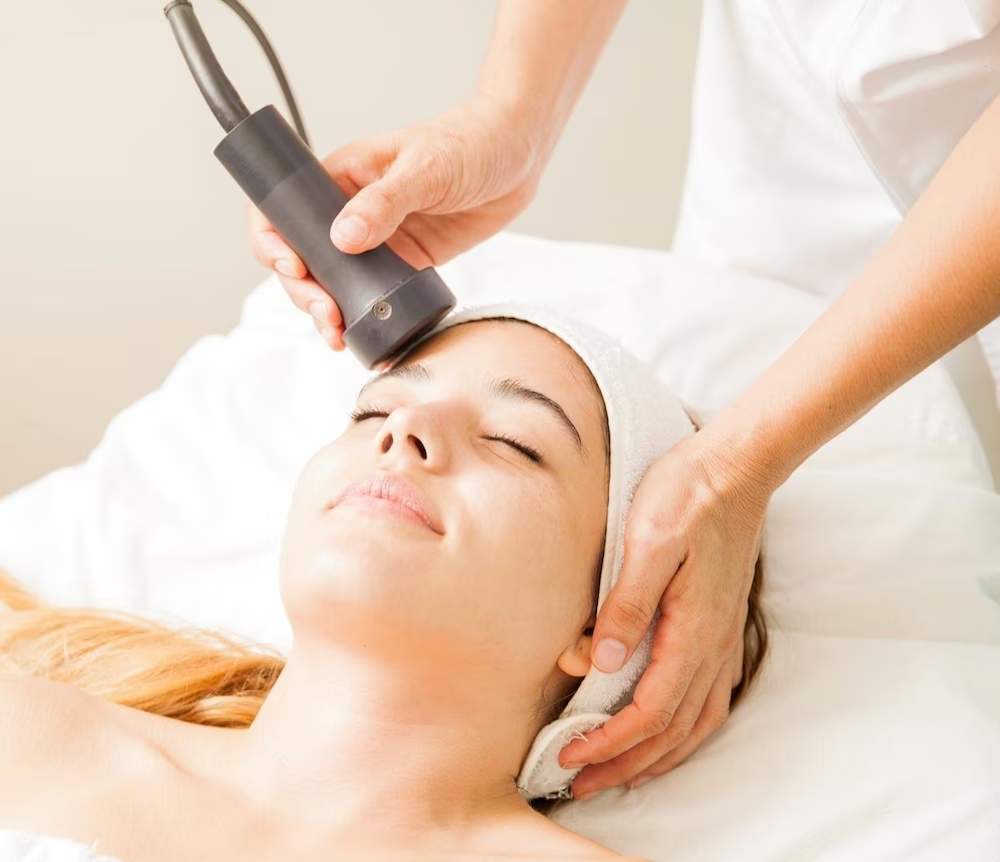
The session itself takes 30-45 minutes for a full face. You'll wear protective eye shields, your provider will apply cool gel, and the IPL handpiece is passed across the treatment area in pulses. Each pulse feels like a quick rubber-band snap with warmth. The cooling sapphire tip on our device significantly reduces discomfort — most clients describe the sensation as tolerable, not painful.
Immediately after treatment, brown spots look darker — almost like they've been outlined in coffee. This is a good sign. The pigment has been heated and is preparing to lift to the surface. Over the next 7-14 days, those darkened spots will flake off naturally, taking the underlying pigment with them. Don't pick at them — let them shed on their own.
By two weeks post-session, your skin will look noticeably brighter, more even, and clearer. The darkened spots from treatment day will have fallen away. Redness from vascular treatment will have faded. Many clients describe the result after their first session as 'the makeup-free glow I haven't had in a decade.'
For most Murfreesboro clients, the ideal IPL series is 3-5 sessions spaced 4 weeks apart. That number changes based on what we're treating:
Why monthly cadence? IPL stimulates the skin's natural turnover and collagen production, and that process takes about 28 days to complete a cycle. Treating before the previous cycle finishes wastes the energy of the light without compounding the benefit. Spacing further than 6 weeks reduces the cumulative effect.
This is where most clients get the timing wrong. IPL works by targeting pigment in your skin. If you have a fresh tan or sunburn, the device can't tell the difference between the melanin in your sunspot and the melanin in your tanned cheek. The result of treating tanned skin is increased risk of burns, blistering, and worsening of the original pigmentation.
The rule we follow at our Murfreesboro studio: no significant sun exposure or self-tanner for 4 weeks before your appointment, and strict sun protection for 4 weeks after. That makes September through April the ideal IPL window in Tennessee, when daily UV exposure drops and your skin can fully reveal its baseline pigmentation.
That said, summer IPL is possible for clients who can commit to:
If you're not willing to live by those rules during a Murfreesboro summer, we'll recommend you start in September. There's no point starting a treatment series that requires a lifestyle you can't sustain.
Clients often ask how IPL compares to other treatments we offer at our Murfreesboro studio. The short version:
IPL vs. Chemical Peels: Peels work surface-down, removing the top layer of damaged skin and stimulating new cell turnover. Best for texture, fine lines, and surface pigmentation. IPL works deeper, targeting specific pigment and vascular issues without removing skin. The two are highly complementary — many clients alternate them in their routine. Read more about our chemical peel options.
IPL vs. Microneedling: Microneedling creates micro-channels in the skin that trigger collagen production, best for texture, acne scars, fine lines, and pore appearance. IPL is the wrong tool for those concerns. If you have texture issues plus pigmentation, you'll want both — typically alternating monthly.
IPL vs. Laser Hair Removal: Both use light, but the wavelengths and targets are completely different. IPL targets pigment and vascular concerns in the skin. Laser hair removal uses different wavelengths to target hair follicles. They are not interchangeable.
IPL vs. HydraFacial: A HydraFacial is a maintenance treatment that cleanses, exfoliates, and hydrates. IPL is a corrective treatment for accumulated damage. Most of our clients do HydraFacials monthly and IPL series 1-2x per year.
Single-session IPL pricing in Murfreesboro at our studio typically runs $275-$450 depending on treatment area (full face vs. spot treatment vs. face + neck + chest). Most clients save significantly by purchasing a package of 4 or 5 sessions, which drops the per-session cost by 15-25%.
Cost considerations beyond the per-session fee: medical-grade SPF (we sell ours in studio for $35-$65), a post-treatment hydration kit, and any pre-treatment skincare we recommend. Plan for $400-$2,000 total for a complete series with at-home products included, depending on the package and number of sessions.
Current Summer Features include IPL package discounts for clients who book before mid-August. Check our advanced skin treatments page for what's running this month.
Every IPL series at Aesthetics Collective starts with a complimentary consultation. Rachel Clayton-Gubler, our Master Aesthetician, Owner, and Acne & Pigmentation Specialist, personally trained the team on our IPL protocols. Licensed aestheticians on the team — including Tricia Hoover and Emily Rodriguez — handle the day-to-day sessions.
At your consultation, we'll:
If IPL isn't the right tool for what you're trying to address, we'll tell you directly and recommend the right alternative. We don't sell treatments for the sake of selling treatments.
If you've been staring at sun damage in the mirror all summer and wondering whether anything actually fixes it — yes, IPL fixes it, and Murfreesboro's UV index makes you a strong candidate for treatment in the fall. Book your consultation today, browse our full services menu, or read our about page to meet the team before you come in.
Most clients describe IPL as tolerable but uncomfortable — like a quick rubber-band snap with warmth. Our device's sapphire cooling tip significantly reduces the discomfort, and we apply a cool gel that helps further. Sensitive areas like the nose and chin feel more intense than the cheeks. We can apply a topical numbing cream before treatment if you're particularly sensitive, at no extra charge.
You'll see brown spots appear darker immediately after your first session — that's the pigment lifting to the surface — and they'll flake off over 7-14 days, revealing more even skin underneath. Most clients see measurable improvement after one session, with full results developing across the entire 3-5 session series. Cumulative effects on tone, brightness, and collagen continue for 3-6 months after your last session.
IPL is safest and most effective for Fitzpatrick skin types I-III (lighter tones). Modern devices can treat types IV-V with adjusted settings, but the risk of pigment changes increases significantly for darker skin tones. We always patch-test darker skin before a full session, and for Fitzpatrick V-VI we typically recommend alternative treatments like chemical peels or microneedling instead.
You should avoid makeup for 24 hours after IPL to let the skin calm down and the treated pigment begin lifting. After 24 hours, mineral-based makeup is fine. Avoid heavy or pore-clogging foundations for the first week, and never skip your SPF — newly treated skin is significantly more sensitive to UV for 2-4 weeks.
Lasers emit a single, focused wavelength of light, while IPL emits a broad spectrum that your provider filters to target specific concerns. Lasers are typically more aggressive and used for deeper treatments. IPL is gentler, treats multiple concerns in the same session, and has zero downtime — most clients return to work the same day. For most pigmentation and vascular concerns, IPL is the right starting point.
BBL (BroadBand Light) is a more advanced form of IPL developed by Sciton. The principles are the same — broad-spectrum light targeting pigment and vascular concerns — but BBL devices often allow finer wavelength control and additional filters. Both deliver excellent results for sun damage and vascular concerns. The right choice depends on your specific skin and what's available at the studio you choose.


